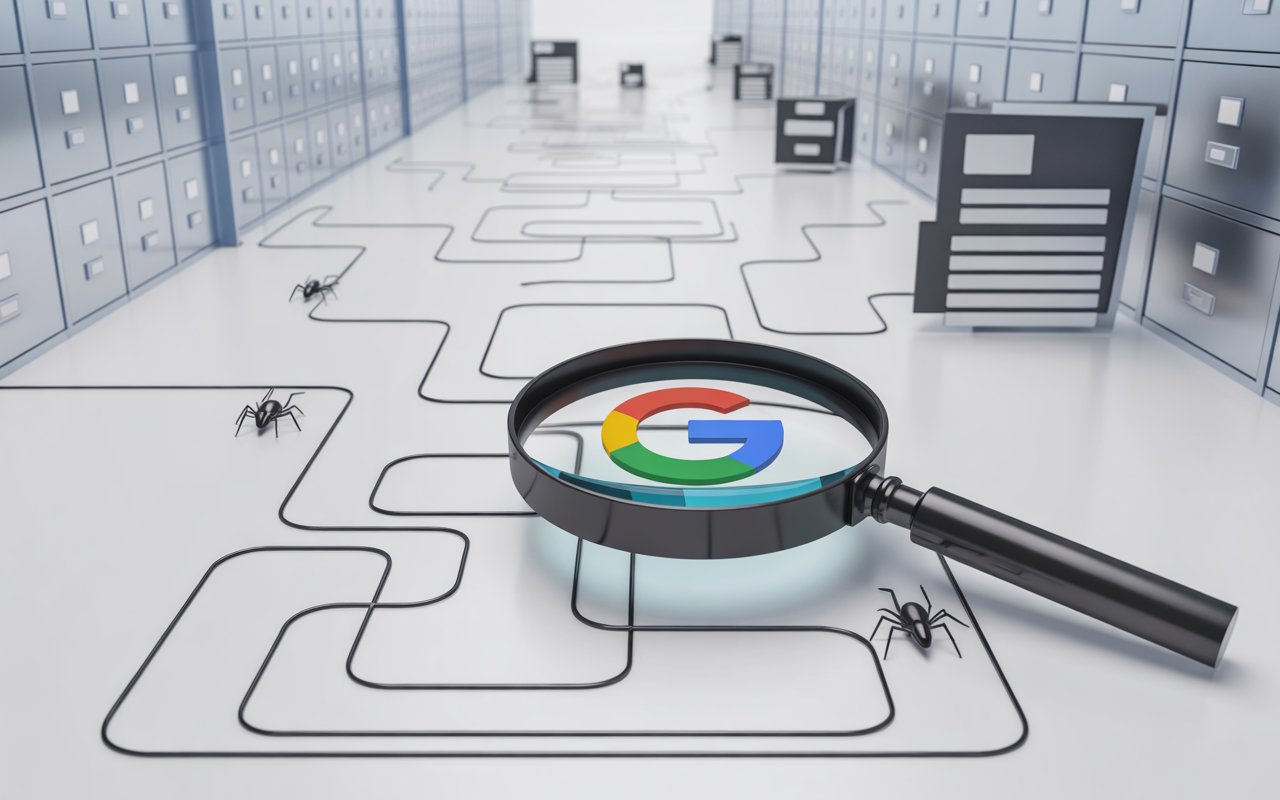
Google sometimes ignores your chosen canonical URL and picks a different version instead.
This shows up in Search Console as “Duplicate, Google chose different canonical.” It means Google sees similar pages and decides which one to index on its own.
This matters because the wrong page can get indexed, ranked, or shown in search results.
That can split your traffic, weaken your SEO signals, and make your preferred page harder to rank.
But not every case is a problem. If Google picks the same page you would have chosen, you can usually leave it alone.
If it picks the wrong page, that’s when you need to step in and fix the signals.
For a full breakdown of other potential indexing issues, read this Google Search Console errors guide.
What “Duplicate, Google Chose Different Canonical” Means
In simple terms, “Duplicate, Google chose different canonical” means Google found similar pages and picked a different one than the version you set.
This happens when Google detects duplicates and selects another page as the better main version to index.
Your canonical tag is only a hint, not a rule, so Google can ignore it if other signals point elsewhere.
There are two key versions to understand. A user-declared canonical is the URL you choose using a canonical tag.
A Google-selected canonical is the page Google actually trusts and shows in search results. These two should match, but they don’t always.
Google determines the canonical URL by considering several signals. It compares how similar the content is across pages. It checks which version gets more internal links.
It looks at your sitemap, backlinks, and overall page quality. It also considers clean URL structure and consistency across your site.
If your signals are clear and aligned, Google usually follows your choice. If they are mixed or weak, Google will pick a different page instead.
Why This Issue Happens
Weak or Conflicting Canonical Signals
Google relies on multiple signals to confirm your preferred page, not just the canonical tag. If those signals don’t match, your hint becomes easy to ignore.
For example, your canonical may point to one URL, but your internal links, redirects, or sitemap point to another.
This creates confusion. When signals are mixed, Google chooses the version that looks more consistent and reliable overall.
Duplicate or Near-Duplicate Content
When multiple pages have very similar or identical content, Google groups them together as duplicates. It then selects one as the main version.
If your preferred page doesn’t stand out, it may not be chosen. Even small differences, like product variations or filtered pages, can still be treated as duplicates.
Without clear signals, Google simply picks the page it believes offers the best version for users.
Internal Linking Inconsistencies
Internal links are one of the strongest signals you control. If most of your links point to a non-canonical version, Google sees that as the more important page.
This often happens with navigation links, blog posts, or older content linking to outdated URLs.
When your linking structure doesn’t support your canonical choice, Google follows the links instead of the tag.
Sitemap vs Canonical Mismatch
Your XML sitemap should only include canonical URLs. If it lists a different version than your canonical tag, you send mixed signals.
Google uses sitemaps as a strong hint for which pages matter.
When the sitemap and canonical disagree, Google may trust the sitemap more, especially if it aligns with other signals.
Parameter URLs and Tracking Tags
URLs with parameters like filters, sorting options, or tracking codes often create multiple versions of the same page. These can quickly look like duplicates to Google.
If these parameter URLs are crawlable and not handled properly, Google may pick one of them as canonical.
This is common with e-commerce sites, where many URL variations exist for the same product or category.
External Backlinks Pointing to Another Version
Backlinks are a powerful ranking signal. If most external websites link to a different version of your page, Google may treat that version as the main one.
Even if you set a canonical, strong backlinks can override your preference.
Google tends to favor the URL with the strongest authority and trust signals, especially when other signals are unclear.
How to Identify Affected Pages
Using Google Search Console (Page Indexing Report)
Start with the Page Indexing report. This is where Google shows exactly which pages are affected by the “Duplicate, Google chose different canonical” status.
You’ll find it under the indexing section, grouped as a specific issue. Open the report and review the list of URLs.
These are pages Google has crawled but decided not to index as the main version. This report gives you a clear starting point.
It also shows trends over time, so you can see if the issue is growing or shrinking.
Using the URL Inspection Tool
Next, inspect individual URLs. Paste a page into the URL Inspection tool and check two key fields: the user-declared canonical and the Google-selected canonical.
If they don’t match, you’ve confirmed the issue for that page. This tool also shows whether the page is indexed, how it was crawled, and if any other signals are affecting it.
It helps you understand why Google made its choice, not just what it chose.
Checking Canonical Tags Manually
You should also verify what your site is actually telling Google. Open the page in your browser, view the page source, and look for the rel=”canonical” tag.
Make sure it points to the correct URL and uses the full, clean version (correct protocol, no parameters unless intended).
This step is important because mistakes here are common. A wrong or missing canonical tag can easily lead to mismatches.
Using SEO Tools (Ahrefs, Screaming Frog, etc.)
Tools like Ahrefs and Screaming Frog SEO Spider help you audit your site at scale. They can crawl hundreds or thousands of pages and flag canonical issues quickly.
You can find pages with missing canonicals, conflicting tags, or duplicates. These tools also highlight internal linking patterns and duplicate content clusters.
This gives you a broader view, so you’re not relying on single-page checks.
When You Should Fix It (And When You Can Ignore It)
Cases Where It’s Harmless
Not every “Duplicate, Google chose different canonical” case needs action.
If Google selects the same page you would have chosen, or a version that behaves the same (for example, with or without a trailing slash), there is no real problem.
Your content is still indexed, and your rankings are not affected.
This often happens with minor URL variations, tracking parameters, or technical duplicates that don’t change the page meaning.
In these cases, Google is simply consolidating signals correctly. As long as the right content appears in search results, you can leave it alone.
Cases Where It Hurts Rankings or Indexing
You should act when Google picks the wrong page.
This includes situations where a weaker page is indexed instead of your main version, or when an important page is excluded entirely.
It can also hurt if Google chooses a parameter URL, a filtered page, or a duplicate with thin content. These versions often have weaker signals, fewer links, and lower relevance.
As a result, your rankings drop or fail to improve. In some cases, your preferred page may not appear in search at all, which means lost visibility and traffic.
Decision Framework: How to Tell if It’s a Problem
Start with one simple check: is the correct page indexed? You can confirm this using Google Search Console or a site search.
If Google is indexing the page you want, the issue is likely safe to ignore. Next, check your traffic.
Look at performance data to see if clicks, impressions, or rankings have dropped for that page. If traffic is stable and the right URL is showing, there is no urgent fix needed.
But if the wrong page is indexed or traffic is declining, you should step in. This approach keeps you focused on issues that actually impact results, not just technical warnings.
Step-by-Step Fix Guide
1. Set the Correct Canonical Tag
Start by making your preferred URL clear. Add a rel=”canonical” tag in the page’s <head> that points to the exact version you want indexed.
Use the full URL, including HTTPS and the correct domain format. Keep it consistent across duplicates so all similar pages point to the same canonical.
Avoid common mistakes like pointing to a non-indexable page, using relative URLs, or setting different canonicals on similar pages.
Also, avoid chains, where one canonical points to another page that has its own canonical. Keep it direct and clean.
2. Fix Internal Linking
Your internal links should always support your chosen canonical. Go through your navigation, blog posts, and key pages.
Make sure every link points to the preferred URL, not a duplicate version. Even small inconsistencies can send mixed signals.
If many links point to a non-canonical page, Google may treat that page as more important. Update old links and templates where needed. This step alone often fixes the issue.
3. Align Sitemap URLs
Your XML sitemap should only include canonical URLs. Remove any duplicates, parameter URLs, or alternate versions.
Search engines use sitemaps as a strong hint for what should be indexed.
If your sitemap lists the wrong version, it weakens your canonical signal. Keep it clean, updated, and aligned with your site structure.
4. Handle Duplicate Content
If multiple pages serve the same purpose, you need to simplify. Either rewrite them to make each page unique or merge them into one stronger page.
When merging, use 301 redirects to send users and search engines to the main version.
Redirects are stronger than canonicals because they remove the duplicate entirely. This helps consolidate ranking signals and avoids confusion.
5. Fix URL Variations
Standardize your URLs across the entire site. Pick one version for each variation and stick to it. Use HTTPS instead of HTTP. Choose either www or non-www.
Be consistent with trailing slashes. Control URL parameters by preventing unnecessary variations from being indexed.
Set up redirects where needed so all versions lead to the same canonical page. This removes duplicate paths and strengthens your signals.
6. Strengthen Canonical Signals
Once everything is aligned, reinforce your preferred page. Add more internal links pointing to it from important pages. This tells Google it’s the main version.
If possible, build backlinks to that exact URL instead of alternate versions. External links carry strong authority, so they can influence Google’s choice.
The goal is simple: make your canonical page the strongest and most consistent option across all signals.
Advanced Fixes (Technical SEO)
Using hreflang Correctly
If your site targets multiple countries or languages, hreflang tags must work alongside your canonicals, not against them.
Each page should have a self-referencing canonical and hreflang annotations that point to equivalent versions in other regions or languages.
The key rule is consistency. The canonical should point to the same language version, not a different country page.
If hreflang points to one URL but the canonical points somewhere else, Google may ignore both signals.
Also, make sure hreflang tags are reciprocal, meaning each version references the others correctly.
When done right, this helps Google choose the correct version for each audience without creating duplicate confusion.
Handling Pagination (rel=prev/next Alternatives)
Google no longer relies on rel=”prev” and rel=”next” as indexing signals, so pagination needs a different approach. Each paginated page should have its own self-referencing canonical.
Do not point all pages in a series to page one, as this can cause deeper pages to be ignored.
Instead, make sure each page is crawlable, linked properly, and contains unique content where possible.
You can also create a “view all” page if it makes sense, and set that as the canonical for the series. Clear internal linking between pages is critical here.
This helps Google understand the sequence without forcing it to pick the wrong canonical.
Managing Faceted Navigation
Faceted navigation (filters like size, color, price) can create thousands of URL variations. Most of these are duplicates or near-duplicates.
If left unchecked, Google may index the wrong versions or choose unexpected canonicals. The goal is control. Decide which filter combinations are valuable and should be indexed.
For the rest, use canonical tags to point back to the main category page, or block them using robots.txt or noindex where appropriate.
Keep internal links focused on clean, primary URLs. This reduces crawl waste and strengthens your canonical signals.
Canonicalization in JavaScript-Heavy Sites
On JavaScript-heavy sites, canonicals can fail if they are not rendered correctly. Google needs to see the canonical tag in the final rendered HTML, not just in the raw script.
If your site relies on client-side rendering, there is a risk that Google misses or delays processing key signals.
To avoid this, ensure canonicals are included in server-side rendering or dynamic rendering where possible.
Test pages using tools like URL Inspection in Google Search Console to confirm what Google actually sees.
Also, make sure each dynamic route has a stable, unique URL and a consistent canonical. This prevents Google from treating different states of the page as duplicates.
Common Mistakes to Avoid
- Canonical loops – This happens when pages point to each other as canonical (A → B, B → A), which confuses Google and weakens all signals.
- Canonical pointing to non-indexable pages – If your canonical points to a page that is noindex, blocked, or redirected, Google cannot use it properly and may choose a different URL instead.
- Mixing noindex and canonical incorrectly – Using noindex on a page while also setting it as canonical sends conflicting signals, often leading Google to ignore both.
- Blocking canonical pages via robots.txt – If your canonical URL is blocked from crawling, Google cannot verify it, so it may ignore your canonical and pick another page.
How Long It Takes Google to Fix Canonicals
There is no fixed timeline for canonical updates, but in most cases, changes can take anywhere from a few days to a few weeks after Google recrawls your pages.
The key factor is crawling. Google has to revisit the page, process the new signals, and then decide whether to update the selected canonical.
On small or frequently updated sites, this can happen quickly. On larger sites or low-priority pages, it may take longer.
Several factors influence this process, including how often your site is crawled, the strength and consistency of your signals, your site’s authority, and how clearly your canonical aligns with internal links, sitemaps, and redirects.
If signals are still mixed, Google may delay or ignore the change.
You can speed things up by requesting indexing in Google Search Console, updating internal links to point to the correct URL, fixing sitemaps, and removing conflicting signals like duplicate canonicals or incorrect redirects.
Adding fresh content or earning new links to the preferred page can also encourage faster recrawling.
The clearer and more consistent your signals are, the quicker Google can process and trust your canonical choice.
Tools to Help Fix Canonical Issues
- Google Search Console – Shows real indexing data directly from Google, including which canonical it selected and which pages are excluded, making it the most reliable starting point for diagnosing issues.
- Screaming Frog SEO Spider – Crawls your entire site and reports canonical tags, duplicates, and conflicts at scale, helping you quickly spot mismatches and technical errors across hundreds or thousands of URLs.
- Ahrefs / SEMrush – Provide full site audits that detect duplicate content, canonical conflicts, and internal linking issues, along with insights into backlinks that may influence Google’s canonical choice.
- Sitebulb – Offers visual site audits and detailed reports that highlight canonical problems, crawl issues, and duplicate clusters, making it easier to understand complex technical patterns.
Final Thoughts
“Google chose different canonical” is not always a problem, but it becomes one when the wrong page is indexed.
The fix is simple in principle: remove confusion and make your preferred URL the strongest option.
Keep your signals clear and consistent. Align canonicals, internal links, sitemaps, and redirects so they all point to the same page.
Check your site regularly. Small technical issues can grow over time, but simple audits help you stay in control and keep Google on the right path.
Need actionable steps to fix other issues in Search Console? Follow this practical indexing issues guide.
FAQs
Google found duplicate pages and picked a different version than the one you set as canonical.
No. It’s not a penalty, just a signal mismatch or duplication issue.
Yes. Canonical tags are hints, and Google may ignore them if other signals are stronger.
Use a 301 redirect when duplicates are unnecessary. Use canonical when multiple versions must exist.
Usually due to conflicting signals like internal links, sitemaps, duplicates, or weaker page authority.





I’m Alex Crawley, an SEO specialist with 7+ years of hands-on experience helping new websites get indexed on Google. I focus on simplifying technical indexing issues and turning confusing problems into clear, actionable fixes.