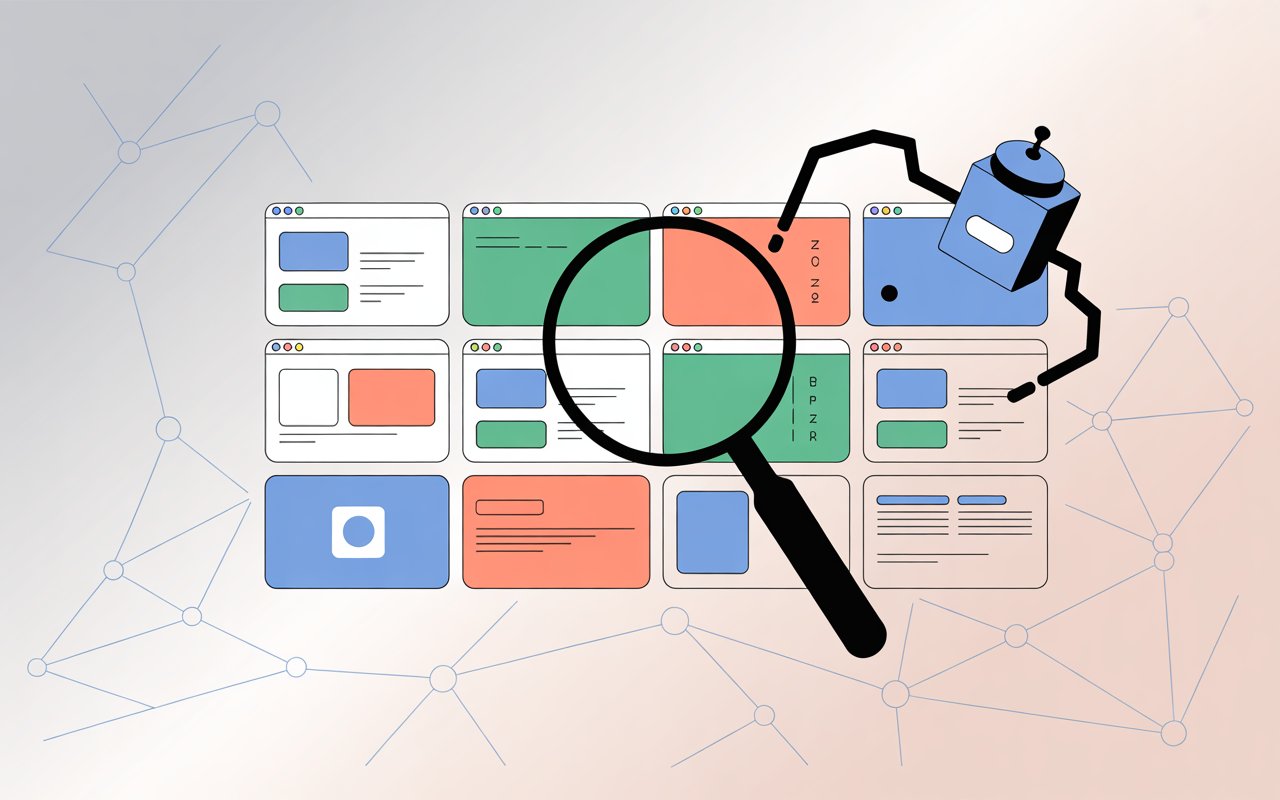
Most new websites don’t struggle because of bad content, but they struggle because Google simply isn’t checking them often enough.
Re-crawling is when Google comes back to your site to look for updates.
It’s how your new pages get discovered, your changes get noticed, and your rankings improve over time.
Many people assume Google visits their site every day. That’s not how it works, especially for new websites.
In reality, Google re-crawls new websites every few days to weeks at first, then more frequently as the site grows, updates regularly, and gains trust signals like backlinks.
The good news? Once you understand what controls re-crawling, you can influence it. And that’s where real SEO progress begins.
Fix underperforming pages with this guide to growth after indexing.
What Is Google Crawling vs Re-Crawling?
Crawling is when Google first discovers your website. Re-crawling is when it comes back later to check for changes.
When your site is new, Googlebot (Google’s crawler) finds it through links or a submitted sitemap. It then visits your pages and reads your content.
This includes text, images, and basic page structure.
The goal is simple: understand what your page is about and store it in Google’s index so it can appear in search results.
Re-crawling works differently. At this stage, Google already knows your page exists. It returns to see what has changed.
This could be new content, updated sections, or even removed pages.
If nothing has changed, Google may visit less often. If your site updates regularly, it may return more frequently.
Googlebot works like a system that moves from page to page by following links. It doesn’t visit everything at once. It also doesn’t follow a fixed schedule.
Instead, it decides what to crawl based on signals like site activity, importance, and reliability.
How Often Does Google Re-Crawl New Websites?
There is no fixed schedule for how often Google re-crawls new websites, and this is the most important thing to understand because many site owners expect consistent daily visits when that rarely happens in the early stages.
Instead, Google adjusts its crawl frequency based on how your site behaves over time, which means your crawl rate will naturally change as your website grows, gains trust, and publishes more content.
Typical patterns look like this:
- Brand new sites: Google may return every few days or even weeks, especially if there are few pages or little activity
- Growing sites: As you add content and build signals, Google can start visiting multiple times per week
- Established sites: Strong, active websites may be crawled daily or even hourly, particularly if they publish content frequently
Factors That Influence Crawl Frequency
Website Authority
Google is more likely to revisit websites it trusts. That trust comes mainly from backlinks and overall site quality.
When other websites link to your pages, it signals that your content is worth paying attention to.
Strong backlinks act like recommendations, helping Google decide your site deserves more frequent visits. New websites usually don’t have these signals yet.
As a result, Google has less reason to return often. This is why brand-new sites are crawled less frequently at the start.
Over time, as you earn links and build credibility, crawl frequency naturally improves.
Content Publishing Frequency
Websites that publish content regularly tend to get crawled more often. Google learns patterns.
If your site updates consistently, it expects new content and comes back more frequently to check.
On the other hand, if your site rarely changes, Google reduces how often it visits. Fresh content also signals that your site is active and relevant.
This doesn’t mean you should publish daily without purpose. What matters is consistency. Even a steady, realistic schedule can train Google to crawl your site more often.
Internal Linking Structure
Internal links help Google move through your site efficiently. When you link from one page to another, you guide Googlebot to important content.
This becomes especially useful when you publish new pages or update existing ones. If those pages are linked from already indexed content, Google can find them faster.
Without internal links, pages can become isolated. That makes them harder to discover and slower to get re-crawled.
A clear linking structure improves both crawl speed and visibility.
Website Performance
Google wants to crawl sites without wasting resources. If your site is slow or unstable, it limits how much Googlebot can crawl.
Fast-loading pages and reliable servers make a big difference. When your site responds quickly, Google can crawl more pages in less time. This improves crawl efficiency.
If your site frequently times out or returns errors, Google may reduce crawl activity to avoid strain. In simple terms, better performance leads to better crawling.
Sitemap & Technical SEO
Technical signals help Google understand your site more clearly. An XML sitemap acts like a roadmap. It shows Google which pages exist and which ones matter most.
While it doesn’t guarantee faster crawling, it makes discovery easier. Proper indexing signals also matter.
Pages should not be blocked by robots.txt or noindex tags unless intentional.
Clean site structure, correct status codes, and well-organized URLs all help Google crawl your site more effectively.
When everything is clear and accessible, Google can revisit your pages with confidence.
How to Check When Google Last Crawled Your Site
Using Google Search Console
The easiest way to see when Google last visited your site is through Google Search Console. Once your site is verified, you can view indexing and crawling data directly from Google.
The platform shows which pages are indexed, which are not, and whether Google is actively crawling your site.
It doesn’t always show exact crawl timestamps for every page in one place, but it gives you a reliable overview of crawl activity.
If your pages are being updated in Search Console, it’s a strong sign that Google is revisiting your site.
URL Inspection Tool
The URL Inspection tool inside Google Search Console gives you more precise details. You can enter any page URL and check its current status.
One of the most useful pieces of data is the “Last crawl” date. This tells you exactly when Googlebot last visited that specific page.
You can also see if the page is indexed, if there are any issues, and even request re-crawling after making updates.
This makes it one of the most practical tools for tracking crawl frequency on individual pages.
Server Log Files (Advanced Insight)
For deeper analysis, server log files show every visit made to your website, including visits from Googlebot.
These logs are stored on your hosting server and record each request, along with timestamps and user agents.
By filtering for Googlebot, you can see exactly when and how often it crawls your site. This method is more technical, but it gives the most accurate view of real crawl behavior.
It also helps you spot patterns, such as which pages are crawled more often and which ones are ignored.
How to Get Google to Crawl Your Site More Often
1. Publish Content Consistently
Google pays attention to how often your site changes. When you publish content on a steady schedule, it learns that your site is active and worth checking more often.
This doesn’t mean posting every day. What matters is consistency.
A realistic schedule, whether it’s once a week or a few times a month, helps Google form a pattern.
Over time, this can lead to more frequent crawling because your site becomes predictable and reliable.
2. Build Backlinks
Backlinks are one of the strongest signals that your site matters. When other websites link to your pages, Google sees that as a sign of trust and relevance.
Pages with backlinks tend to get crawled faster and more often because they are easier to discover and considered more important.
For new websites, even a few quality links can make a noticeable difference. The focus should always be on earning links naturally, not forcing them.
3. Improve Internal Linking
Internal links help Google find your content quickly. When you link new pages from existing, already indexed pages, you create clear paths for Googlebot to follow.
This reduces the chance of pages being missed or delayed in crawling. It also signals which pages are important on your site.
A strong internal linking structure ensures that updates and new content are discovered faster and more efficiently.
4. Submit URLs in Google Search Console
Submitting URLs through Google Search Console can speed up discovery, but it should be used strategically. It’s most useful for new pages, major updates, or important fixes.
You can request indexing using the URL Inspection tool, which prompts Google to re-crawl the page.
However, this is not a long-term solution for crawl frequency. It works best as a temporary push, not a replacement for strong site signals like content and links.
6.5 Keep Your Site Technically Healthy
A clean, fast, and error-free site is easier for Google to crawl. If your pages load quickly and your server responds reliably, Google can crawl more pages in less time.
On the other hand, issues like broken links, server errors, or slow loading speeds can reduce crawl activity.
Fixing these problems improves crawl efficiency.
Simple steps like optimizing page speed, removing errors, and keeping your site stable can have a direct impact on how often Google visits.
Crawl Budget Explained (Simple Version)
Crawl budget is the number of pages Googlebot is willing and able to crawl on your site within a given time, and it is mainly influenced by two things: how much your server can handle (crawl capacity) and how important Google thinks your pages are (crawl demand).
For small or new websites, this limit is rarely a problem because there are only a few pages to crawl, so Google can easily visit most or all of them without hitting any restrictions.
As your site grows, crawl budget becomes more important because Google has to decide which pages to prioritize and which ones to ignore or visit less often.
This is where issues can start. Large sites with thousands of pages can waste crawl budget on low-value content, duplicate pages, or broken links, which means important pages may not get crawled as often as they should.
For smaller sites, though, the focus should not be on crawl budget at all.
It’s far more effective to concentrate on creating useful content, maintaining a clean site structure, and avoiding technical errors.
When your site grows to a point where Google cannot efficiently crawl everything, that’s when crawl budget starts to matter.
Until then, keeping your site simple, fast, and well-organized is more than enough.
Common Mistakes That Slow Down Re-Crawling
- Publishing too much low-quality content: Adding large amounts of thin or unhelpful content can reduce trust in your site, which may lead Google to crawl it less often
- Poor site structure: If your pages are hard to navigate or not clearly connected, Googlebot may struggle to find and revisit important content
- Duplicate pages: Repeated or very similar content wastes crawl resources and makes it harder for Google to know which version to prioritize
- Slow loading times: A slow website limits how many pages Google can crawl in one visit, which reduces overall crawl frequency
- Not updating old content: Pages that never change signal low activity, giving Google less reason to return and check for updates
How Long It Takes for Changes to Be Noticed
How quickly Google notices changes on your site depends on what you change and how often your pages are re-crawled.
Minor updates, like fixing a few sentences or adjusting headings, may take longer to be picked up because they don’t strongly signal that the page has changed in a meaningful way.
Major updates, such as adding new sections, improving depth, or updating key information, are more likely to trigger faster re-crawling because they show clear value.
In most cases, changes are noticed within a few days to a few weeks, but this varies based on your site’s crawl frequency, authority, and activity level.
New or low-activity sites often wait longer, while active and trusted sites are checked more quickly. It’s important to understand that Google does not instantly react to every change.
It needs to revisit the page, process the update, and then adjust its index. This takes time.
Patience is key, because frequent small improvements combined with consistent publishing and good site signals will naturally lead to faster recognition over time.
New Website Timeline: What to Expect
Week 1–2: Initial Crawling
In the first couple of weeks, Google is still discovering your website. This usually happens through links, sitemaps, or manual submission in Google Search Console.
Googlebot may visit a few pages, but crawling is limited and not consistent. Some pages might get indexed quickly, while others are ignored for now.
This stage is mostly about discovery, not frequency. It’s normal if your site feels invisible during this time.
Month 1–3: Irregular Crawling
As your site starts to grow, Google begins to revisit it, but not on a fixed schedule. Crawling may feel random.
Some pages get checked more than others, and gaps between visits can still be long. This is where Google is testing your site.
It looks at how often you publish, how your pages are linked, and whether your content is worth returning to.
Small improvements in structure, consistency, and content quality can start to make a noticeable difference here.
Month 3+: Increased Crawl Frequency
After a few months of consistent activity, crawl frequency usually improves. Google has more data about your site and begins to trust it more.
If you are publishing regularly, building links, and keeping your site clean, Googlebot will return more often.
At this stage, new pages can be discovered faster, and updates are picked up more quickly. Growth becomes more stable, and crawling starts to feel predictable.
Final Thoughts
Crawl frequency improves over time as your site grows and builds trust. It doesn’t happen instantly, but it does happen with the right signals.
Focus on consistency and quality. Publish useful content, keep your site clean, and make updates that matter.
Avoid shortcuts. Long-term SEO wins come from steady effort, not quick fixes.
Learn how to build authority with this post-indexing growth system.
FAQs
Every few days to a few weeks. It depends on activity, content, and signals like links.
No. You can request indexing, but you can’t control crawl frequency directly. Google decides based on your site’s value and activity.
Common reasons include low-quality content, no updates, weak internal linking, few backlinks, or technical issues like slow speed or errors.
Yes. Regular updates signal that your site is active, which encourages Google to return more often.
Publish meaningful updates, link to the page from indexed content, and request indexing in Google Search Console.





I’m Alex Crawley, an SEO specialist with 7+ years of hands-on experience helping new websites get indexed on Google. I focus on simplifying technical indexing issues and turning confusing problems into clear, actionable fixes.