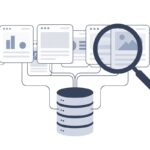
Your page is indexed. That means Google has found it and added it to its database.
But here’s the problem: Being indexed doesn’t mean people will see it. Many pages sit in Google without getting a single click.
Traffic only comes when your page ranks, matches what people are searching for, and stands out enough to earn clicks. If that’s not happening, your page stays invisible.
The good news? This is fixable. Once you understand what’s missing, you can turn an indexed page into one that actually gets traffic.
Struggling with rankings? Learn what to do next in this guide to growing after indexing.
What Does “Indexed” Actually Mean?
“Indexed” means a search engine like Google has discovered your page, processed its content, and stored it in its database so it can be shown in search results when relevant queries are made.
This happens after a process called crawling, where bots (often called spiders) scan your website and follow links to find new or updated pages.
Once a page is crawled, it may be indexed, which means Google understands what the page is about and adds it to its searchable library.
Ranking comes next, and this is where most pages fail because Google decides where your page appears compared to others targeting the same topic.
If your page ranks low, it might technically exist in Google’s index but still be buried so deep that no one ever sees it.
That’s why indexing alone doesn’t guarantee visibility or traffic; it simply means your page is eligible to appear, not that it will be shown in a meaningful position or attract clicks.
1. The Biggest Reason: You’re Not Ranking
The most common reason your indexed page gets no traffic is simple: you’re not ranking where people actually look.
When someone searches on Google, the algorithm quickly sorts through millions of indexed pages and ranks them based on relevance, content quality, user intent, and signals like backlinks and engagement.
Your page is then placed somewhere in the results, but position matters more than presence.
Most users click results on the first page, and a large share never go past the top few listings, which means pages sitting on page 5 or beyond are practically invisible.
Even if your content is decent, it won’t get traffic unless it competes well enough to reach those top spots.
First-page visibility is critical because that’s where attention is concentrated, clicks happen, and traffic begins.
If your page isn’t there, the issue isn’t indexing, but it’s that Google doesn’t see your page as strong enough yet to rank where it counts.
2. Low Search Volume (No One Is Searching)
Another common reason your indexed page gets no traffic is that you’re targeting topics no one is actively searching for.
Even if your content ranks well, it won’t bring visitors if the keyword has little or zero demand.
Search engines like Google rely on user queries, so without searches, there are no impressions and no clicks.
This often happens when content is built around assumptions instead of real data, or when keywords are too specific, obscure, or not phrased the way people actually search.
To avoid this, you need to check search volume before creating content using tools like Google Keyword Planner, Ahrefs, or SEMrush, which show how many people search for a term each month.
The goal isn’t always to chase high-volume keywords, but to find a balance between keywords with enough demand to bring traffic, yet low enough competition that you can realistically rank.
If you go too low, you get no traffic; too high, and you may never rank.
The key is choosing topics that people are already searching for while still giving yourself a chance to compete.
3. Weak Keyword Targeting
Weak keyword targeting is another major reason indexed pages fail to get traffic, because even if your page exists in Google, it may not match what people are actually searching for.
The biggest issue is misaligned search intent.
If someone searches for a quick answer but your page is long and unfocused, or if they want to buy something but your content is purely informational, Google is unlikely to rank your page highly.
Another problem is targeting overly broad or irrelevant keywords, where your page tries to compete for general terms that are too competitive or don’t clearly match your content, making it harder for search engines to understand your page’s purpose.
On top of that, many pages fail because they are not optimized around a clear primary keyword, meaning the topic is scattered and lacks focus, which weakens relevance signals.
Strong keyword targeting solves this by aligning your content with a specific search intent, choosing keywords that accurately reflect what your page delivers, and building the content around one main keyword supported by closely related terms.
4. Poor Content Quality
Poor content quality is a key reason indexed pages don’t get traffic, because search engines like Google prioritize content that genuinely helps users.
Thin or low-value content, such as very short pages, generic explanations, or content that repeats what’s already widely available, gives Google little reason to rank your page above others.
If your content lacks depth, it fails to fully answer the topic, leaving gaps that stronger pages cover better.
A lack of originality also hurts, especially when your page doesn’t offer new insights, examples, or clear explanations that make it stand out.
Most importantly, if your content does not satisfy user intent, it will struggle to rank even if it is indexed.
For example, a reader looking for step-by-step guidance will leave quickly if your page only provides surface-level information.
Google measures how useful your page is based on signals like engagement, relevance, and completeness, so content that is clear, detailed, and directly solves the reader’s problem is far more likely to rank and attract traffic.
5. High Competition Keywords
High competition keywords are another major reason indexed pages get no traffic, because you’re competing against strong, established websites that search engines like Google already trust.
These authority sites have built up credibility over time through high-quality content, strong backlink profiles, and consistent user engagement, which makes it much harder for newer or smaller sites to outrank them.
When you target broad, highly competitive keywords, your page may get indexed but will often be pushed far down the results, where it receives no visibility.
This is why new sites struggle to rank because they simply haven’t built enough authority or trust yet to compete at that level.
A more effective approach is to focus on long-tail keywords, which are more specific search phrases with lower competition and clearer intent.
These keywords may have lower search volume, but they are easier to rank for and often bring more targeted traffic, giving your page a realistic chance to appear higher in search results and start gaining visibility.
6. No Backlinks or Authority
A lack of backlinks and overall authority is another key reason indexed pages fail to get traffic, because search engines like Google use links as signals of trust and credibility.
Backlinks (links from other websites to your page) act like votes, showing Google that others find your content valuable enough to reference, which can directly improve your rankings.
Pages with no backlinks often struggle because they have no external validation, making it harder for Google to see them as reliable compared to competitors with strong link profiles.
This is why authoritative sites consistently rank higher. They’ve earned trust over time through quality content, consistent publishing, and a network of backlinks pointing to them.
Internal linking also plays an important role, as linking between your own pages helps distribute authority across your site and makes it easier for search engines to understand your content structure.
External links build trust from outside your site, while internal links strengthen your site from within, and both are necessary if you want your indexed pages to move up in rankings and start generating traffic.
7. Poor On-Page SEO
Poor on-page SEO can quietly stop an indexed page from getting traffic because search engines like Google rely on clear signals to understand what your page is about.
If your title tag is missing, too vague, or not aligned with what people search for, your page becomes harder to rank and less appealing to click, while weak or missing meta descriptions reduce your chances of attracting attention in search results.
Improper heading structure also creates confusion.
When headings are missing, out of order, or not descriptive, it becomes difficult for both users and search engines to follow your content.
Another common issue is poor keyword placement, where the main keyword is either not included in key areas like the title, headings, and early content, or is used in a scattered way that weakens relevance.
Strong on-page SEO fixes this by making your page clear, structured, and focused, helping Google understand exactly what your content covers and increasing your chances of ranking higher and earning clicks.
8. Technical SEO Issues
Technical SEO issues can hold back an indexed page even if the content is good, because search engines like Google factor in how well your page performs for users.
Slow page speed is a major problem. If your site takes too long to load, users leave quickly, and Google sees that as a poor experience, which can lower your rankings.
Mobile usability is just as important, especially since Google uses mobile-first indexing, meaning it primarily evaluates the mobile version of your site.
If your page is hard to read, buttons are difficult to tap, or content doesn’t fit properly on smaller screens, it can hurt both rankings and engagement.
Core Web Vitals add another layer, focusing on real user experience metrics like loading speed (Largest Contentful Paint), interactivity (First Input Delay), and visual stability (Cumulative Layout Shift).
If these metrics are poor, your page may struggle to compete, even if it is indexed.
Fixing technical issues makes your site faster, smoother, and easier to use, which helps both users and search engines trust your page enough to rank it higher.
9. Content Is Too New
Sometimes the reason your indexed page gets no traffic is simply that it’s too new, and search engines like Google haven’t built enough trust in it yet.
New pages and websites often go through what many SEO professionals call the “sandbox” effect, where content is indexed but held back from ranking highly until it proves its value over time.
This doesn’t mean your content is bad; it just hasn’t gathered enough signals like user engagement, backlinks, and consistent performance to compete with older, established pages.
Gaining traction takes time because Google needs to see that your content remains relevant, helpful, and stable, rather than temporary or low-quality.
This is why consistency matters. Publishing regularly, updating existing content, and building links all help strengthen your site’s authority over time.
As your site grows and earns trust, your pages are more likely to move up in rankings and start attracting traffic.
10. No Internal Linking
No internal linking can leave your indexed pages isolated, making it harder for search engines like Google to discover, understand, and rank them properly.
When pages are not connected within your site, they become harder to find during crawling, and they don’t receive any shared authority from stronger pages, which limits their ability to rank.
Internal links act as pathways that guide both users and search engines through your content, helping Google understand which pages are important and how topics are related.
They also distribute authority across your site, meaning a well-performing page can pass value to newer or weaker pages through strategic linking.
Best practices include linking to relevant pages naturally within your content, using clear and descriptive anchor text, and ensuring important pages are not buried too deep in your site structure.
When done correctly, internal linking strengthens your entire site, improves crawlability, and increases the chances of your indexed pages gaining visibility and traffic.
11. Not Matching Search Intent
Not matching search intent is a major reason indexed pages fail to get traffic, because search engines like Google prioritize content that closely fits what users actually want.
Every search has an intent behind it, such as informational (learning something), transactional (buying something), or navigational (finding a specific site), and if your content doesn’t match that intent, it won’t rank well.
For example, if someone searches “best laptops to buy” and your page only explains how laptops work, users will leave quickly because the content doesn’t meet their expectations, and Google will push your page down.
This mismatch signals that your page is not useful for that query, even if it is indexed.
To fix this, you need to study what already ranks on the first page and identify the type of content Google favors, then align your page to match that format and purpose.
When your content directly answers what the user is looking for in the way they expect, it becomes much easier to rank higher and start gaining traffic.
12. Poor CTR (Click-Through Rate)
Poor click-through rate (CTR) can stop an indexed page from getting traffic, even if it ranks, because users still need a reason to choose your result over others on Google.
If your title is weak, unclear, or too generic, it won’t grab attention, and users will scroll past it in favor of something more compelling.
The same applies to meta descriptions. If they are missing, poorly written, or don’t clearly explain the value of your page, they fail to support the click decision.
Even a well-ranked page can struggle if it doesn’t stand out visually or emotionally in search results.
Google also pays attention to user behavior, so if your listing gets fewer clicks compared to others around it, it can slowly lose its position.
Standing out in the search engine results pages (SERPs) is essential, which means writing clear, benefit-driven titles, using language that matches what users are searching for, and creating descriptions that make it obvious why your page is worth clicking.
13. Content Isn’t Updated
Content that isn’t updated can slowly lose traffic even if it was once ranking well, because search engines like Google prioritize fresh, accurate, and relevant information.
Over time, facts change, competitors improve their content, and user expectations evolve, which means outdated pages can drop in rankings as newer, more useful content replaces them.
Regularly refreshing your content helps maintain relevance, improve accuracy, and signal to Google that your page is still active and valuable.
This doesn’t always mean rewriting everything.
Small updates like adding new information, improving clarity, updating examples, or fixing outdated sections can make a significant difference.
Clear signs your content needs updating include declining traffic, lower rankings, outdated statistics, broken links, or content that no longer fully answers current user needs.
Keeping your content fresh ensures it stays competitive, improves user experience, and increases your chances of maintaining or gaining traffic over time.
How to Fix Indexed Pages With No Traffic
- Improve keyword targeting
Focus on one clear primary keyword that matches what people are actually searching for, and ensure your content aligns with the intent behind that search. Use tools and search results to confirm demand and relevance before optimizing. - Optimize on-page SEO
Rewrite your title tag to be clear and compelling, improve your meta description to encourage clicks, and structure your content with proper headings so search engines like Google can easily understand your page. - Add internal links
Link to your page from other relevant posts on your site using natural anchor text, and also link out to related pages to strengthen your site structure and help distribute authority. - Build backlinks
Get links from other websites to increase trust and authority, whether through guest posts, outreach, or creating content worth referencing, as backlinks remain a strong ranking signal. - Update and expand content
Add missing details, improve clarity, include examples, and make your content more useful than competing pages so it better satisfies user intent and stays relevant over time. - Improve CTR (titles/descriptions)
Rewrite your title to stand out in search results and make your meta description clearly explain the benefit of clicking, giving users a strong reason to choose your page over others.
Final Thoughts
Getting indexed is only the first step. It means your page exists in Google, not that it will get traffic.
Traffic comes when your page ranks, matches what people are searching for, and offers real value.
Focus on improving your content, targeting the right keywords, and making your page worth clicking.
Do that consistently, and your indexed pages can start turning into real traffic.
If your site still feels stuck, follow this proven framework for growth after indexing.
FAQs
Because it’s not strong enough compared to competing pages in terms of relevance, quality, or authority.
It can take a few weeks to several months, depending on competition, content quality, and your site’s authority.
Yes, but it’s harder; low-competition keywords can rank without backlinks, but competitive topics usually require them.
Yes, because fresh, improved content can rank higher and better match current search intent.
Target a low-competition keyword, improve on-page SEO, add internal links, and make your content more useful than what’s already ranking.





I’m Alex Crawley, an SEO specialist with 7+ years of hands-on experience helping new websites get indexed on Google. I focus on simplifying technical indexing issues and turning confusing problems into clear, actionable fixes.